After an AI session: practice, record, and return
CareOps editorial team · · 3 min read
General information and service guidance published by CareOps. This is not an individual diagnosis or treatment plan.
Translated from our Korean guide. Korean public services, insurance, and helpline numbers refer to South Korea. For urgent help elsewhere, contact local emergency services or a crisis line in your country.
You may leave a conversation thinking about contacting a friend, then hesitate when the moment comes. Maeumi’s practice records help you note what happened and what got in the way, rather than grade your performance.
At a glance
- A task card shows the agreed action. You can distinguish the plan from how much you actually tried.
- You can record not having tried yet. Obstacles can become useful topics in a later conversation.
- The image is a real activity-record component with a fictional task, not a customer story or treatment outcome.
1. Read the action you agreed on
The sample task is to ask a friend to meet briefly at a café. Check whether the wording matches your decision. You do not need to interpret a plan to send a message as an obligation to arrange a meeting. Available tasks depend on your conversation and chosen practice; talking without planning an action may not create a task.
See the MI card guide for an example of choosing an action or finishing with reflection alone. You remain responsible for deciding what fits your situation.
2. Separate what you tried from what is still pending
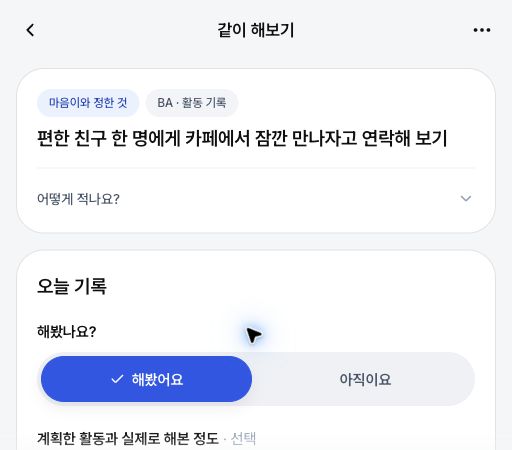
If you sent a message but have not met your friend, record exactly that. If you have not tried, choose “Not yet” and explain what made it difficult. You do not have to turn an intention into a completed action or write an ideal answer.
The activity record includes space to consider mood before and after an activity. Do not force a number when it does not fit your experience. You do not need to feel better to finish a record. If you felt more uncomfortable afterward, that is also something you can report.
3. Bring the record into a conversation
The “Talk with Maeumi about this record” link opens a conversation based on the record. Explain what followed: “I sent the message, but waiting for the reply made me anxious.” Distinguish a plan from an outcome, and describe what you observed before accepting an interpretation.
An unexpected result is useful too: “I expected them to be annoyed, but they suggested next week.” Correct the AI if its interpretation does not fit. Do not assume it remembers every detail of every past record.
4. Use it alongside human counseling
If your counselor has assigned a task, follow that plan. An app suggestion is not a reason to change treatment or medication. Records are not automatically shared with an outside counseling service; decide what you want to show your counselor.
CareOps also offers a separate counselor feedback plan. Scheduled feedback is different from an AI conversation and from real-time crisis monitoring. Check the sharing scope and service terms before applying.
When recording feels burdensome
You can write less or take a break if recording becomes exhausting or repetitive. “I found it hard to write today” is something you can discuss next time. If your immediate safety is at risk, seek urgent human help instead of waiting to finish a record. In South Korea, emergency services are 112/119 and the suicide-prevention line is 109; elsewhere use your local emergency or crisis service.
Frequently asked questions
- Can I record a day when I did not try?
- Yes. The activity record includes a Not yet choice so you can describe obstacles rather than only completed actions.
- Are records automatically sent to my existing counselor?
- Do not assume an outside counseling service receives them. Choose what to share, and review the separate sharing terms if you use CareOps’s counselor plan.
Sources
This article provides general information, not diagnosis or treatment. For urgent help, contact local emergency services or a crisis line in your country. In South Korea, the suicide prevention helpline is 109 (24 hours), and the mental health crisis line is 1577-0199.